Key Takeaways:
- Warehouse automation in 2026 is essential, not optional, due to rising demand and faster delivery expectations.
- It works as a connected system combining WMS, robotics, AI, IoT, and automation tools.
- Most warehouses are hybrid, with humans and machines sharing tasks and responsibilities.
- Growth is driven by e-commerce demand, labor shortages, rising costs, and better technology.
- AI improves forecasting, inventory management, and operational efficiency in real time.
- Benefits include faster fulfillment, higher accuracy, lower costs, and better scalability.
- Challenges include high setup costs, integration issues, workforce changes, and downtime risks.
Warehouse automation has become one of the most important shifts in global logistics, retail, and supply chain management. In 2026, it is no longer just a competitive advantage—it is quickly becoming a baseline requirement for companies that want to keep up with demand, reduce operational costs, and avoid fulfillment bottlenecks.
So, what is warehouse automation and how does it work in 2026? At its core, warehouse automation refers to the use of technology, robotics, software systems, and data-driven processes to perform warehouse tasks with minimal human intervention. These tasks include receiving inventory, storing goods, picking items, packing orders, sorting shipments, and managing inventory levels.
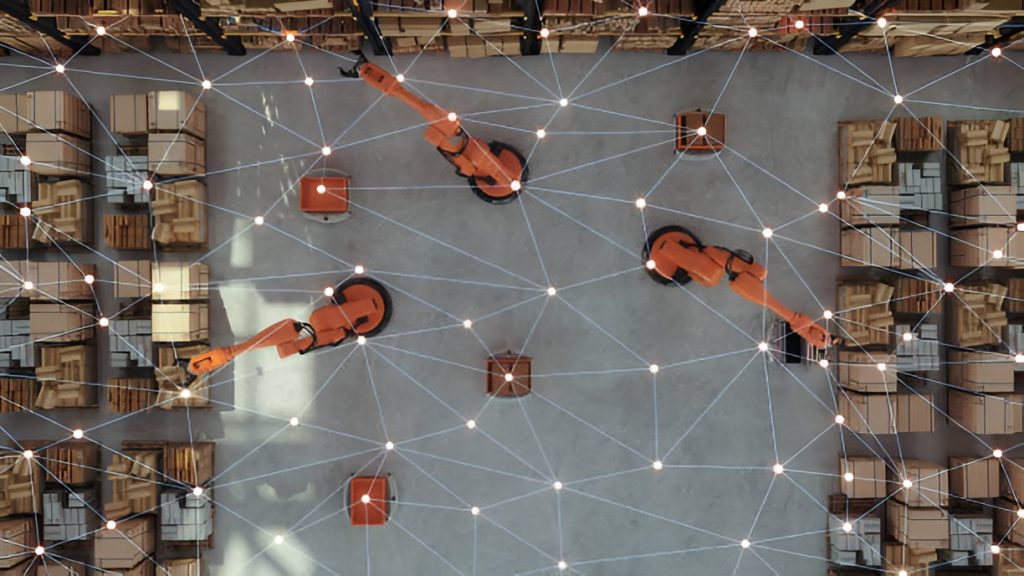
But in 2026, warehouse automation is much more than machines replacing manual labor. It is a connected ecosystem where artificial intelligence, robotics, IoT sensors, and cloud-based platforms work together in real time.
This article breaks down exactly how warehouse automation works today, what systems are involved, why it matters, and how businesses are implementing it at scale.
What Is Warehouse Automation in Simple Terms?
Warehouse automation is the process of using technology to reduce or eliminate manual work inside a warehouse. Instead of relying entirely on human workers to move goods, track inventory, and fulfill orders, automated systems handle much of the workload.
In practical terms, warehouse automation includes:
- Robots moving goods across warehouse floors
- Software managing inventory in real time
- Automated picking systems selecting items for orders
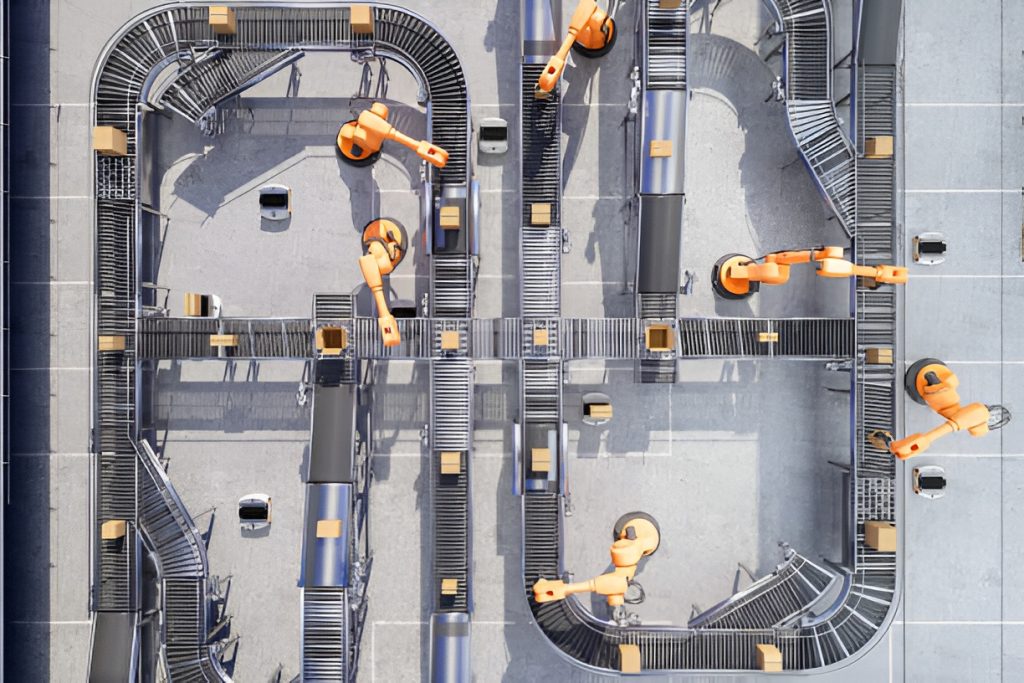
- Conveyor belts sorting packages
- AI predicting demand and optimizing stock levels
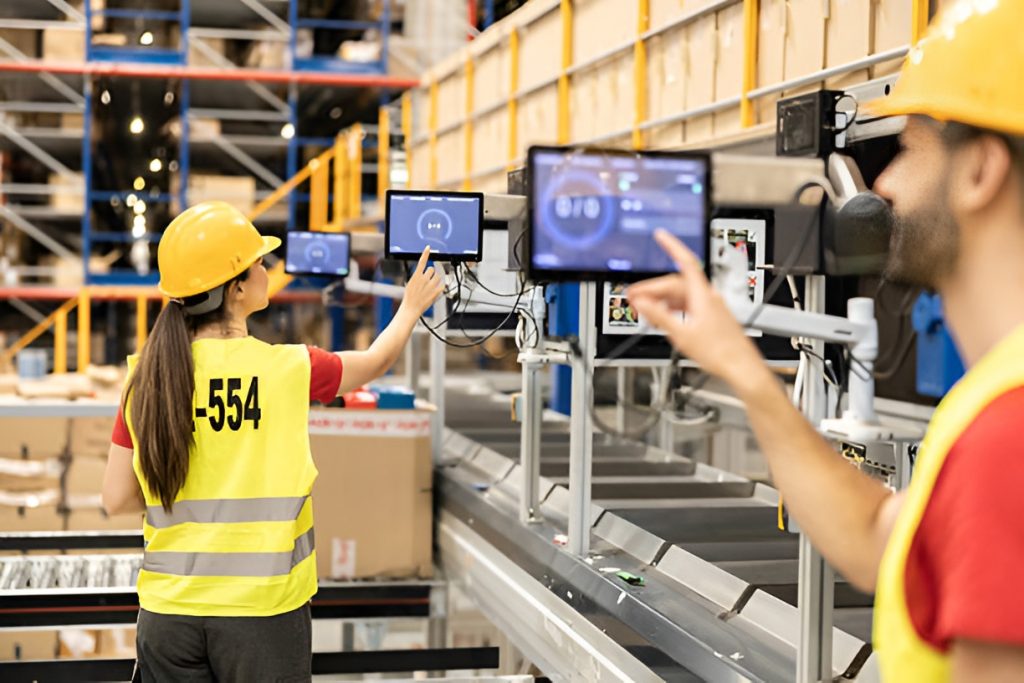
In 2026, most modern warehouses are not fully automated or fully manual—they are hybrid systems where humans and machines collaborate.
Why Is Warehouse Automation Growing So Fast in 2026?
The rise of warehouse automation is not random. Several global trends are pushing companies toward automation faster than ever before.
Is e-commerce demand still increasing?
Yes. Online shopping continues to grow, and customers now expect same-day or next-day delivery. This puts pressure on warehouses to process orders faster and with fewer errors.
At the same time, order volumes are becoming more unpredictable due to seasonal spikes, flash sales, and global marketplace dynamics. Warehouses are under constant pressure to scale operations quickly without sacrificing accuracy or speed.
Are labor shortages affecting warehouses?
Absolutely. Many regions are experiencing a shortage of skilled warehouse workers. Even when labor is available, turnover rates are high, making manual operations unstable and expensive.
This challenge is part of a broader shift in the workforce, reflecting how technology is revolutionizing skilled trades. Traditional hands-on roles are not disappearing, but they are evolving as workers increasingly operate alongside robotics, automation systems, and data-driven tools rather than relying solely on manual processes.
As a result, companies are rethinking job roles inside warehouses. Instead of focusing only on manual labor, workers are being retrained to manage systems, oversee automated equipment, and handle exception-based tasks that require human judgment.
Are costs forcing automation adoption?
Rising labor costs, real estate expenses, and energy consumption are forcing companies to find more efficient ways to operate. Automation helps reduce long-term operational costs.
Beyond direct savings, automation also reduces costly errors such as mispicks, delayed shipments, and inventory inaccuracies. These improvements help companies protect margins while maintaining high service levels in competitive markets.
Is technology finally mature enough?
In 2026, the answer is yes. Robotics, machine learning, and cloud computing have reached a level of reliability that makes large-scale automation practical and cost-effective.
In addition, modern systems are now more flexible and scalable than earlier generations. Businesses can start with partial automation and gradually expand without needing to redesign entire warehouse infrastructures.
How Does Warehouse Automation Actually Work?
To understand how warehouse automation works in 2026, it helps to break it down into connected systems rather than one single technology.
A modern automated warehouse typically includes:
1. Warehouse Management Systems (WMS)
The Warehouse Management System acts as the brain of the operation. It tracks inventory, manages orders, and coordinates all warehouse activities.
A WMS typically handles:
- Inventory tracking in real time
- Order assignment and prioritization
- Storage location optimization
- Worker and robot task scheduling
In 2026, advanced WMS platforms use AI to predict demand and automatically adjust warehouse operations before problems occur.
2. Robotics and Autonomous Mobile Robots (AMRs)
Robots are one of the most visible parts of warehouse automation.
Common types include:
- Autonomous Mobile Robots that move goods across the warehouse
- Robotic arms that pick and place items
- Automated pallet movers
- Sorting robots for packaging and shipping lines
Unlike older systems, modern robots in 2026 are highly flexible. They can navigate dynamic environments without fixed paths and adapt to changes in real time.
3. Automated Storage and Retrieval Systems (AS/RS)
These systems store and retrieve goods automatically from designated storage locations.
They often use:
- Vertical lift modules
- Shuttle systems
- High-density storage racks with robotic access
The goal is to maximize space while reducing retrieval time.
4. Conveyor and Sorting Systems
Conveyors remain a backbone of warehouse automation.
They are used to:
- Move packages between stations
- Sort items by destination
- Speed up order processing
In 2026, conveyors are often integrated with sensors and scanners that automatically identify and route packages.
5. Artificial Intelligence and Predictive Analytics
AI plays a major role in modern warehouse automation.
It is used for:
- Forecasting demand trends
- Optimizing inventory levels
- Reducing stockouts and overstocking
- Improving picking efficiency
AI systems learn from historical data and continuously improve decision-making.
6. Internet of Things (IoT) Sensors
IoT devices provide real-time visibility into warehouse operations.
They monitor:
- Temperature and humidity (important for sensitive goods)
- Equipment performance
- Inventory location
- Movement of goods
This constant flow of data helps systems react instantly to changes.
What Happens Inside an Automated Warehouse Step by Step?
To better understand how everything works together, here is a simplified breakdown of a typical automated warehouse workflow in 2026. While the process looks seamless from the outside, it is actually a tightly coordinated system where software, robotics, and sensors continuously communicate in real time.
Step 1: Inventory Arrives
Goods are delivered to the warehouse and immediately enter the intake zone. Each shipment is scanned using barcode scanners, RFID readers, or vision-based systems to identify product type, quantity, and condition.
At the same time, IoT sensors and warehouse systems automatically update inventory records in the Warehouse Management System (WMS), ensuring stock levels are accurate from the moment items arrive.
Step 2: Storage Assignment
Once the inventory is registered, the WMS determines the most efficient storage location. This decision is based on factors such as product size, weight, turnover rate, and picking frequency.
Fast-moving items are typically placed in more accessible zones, while slower-moving stock is stored in higher-density or less accessible areas to optimize space usage.
Step 3: Robots Store the Goods
After storage locations are assigned, autonomous mobile robots, conveyor systems, or automated lift systems transport goods to their designated areas.
In advanced facilities, robots can navigate dynamic warehouse environments, avoid obstacles, and adjust routes in real time without fixed tracks or human guidance.
Step 4: Order Is Placed
When a customer places an order, it is instantly captured by the system and validated for availability, priority level, and delivery requirements.
The WMS then breaks the order into optimized picking tasks and assigns them to robots, automated systems, or human workers depending on complexity and warehouse setup.
Step 5: Picking Begins
At this stage, robotic picking systems or automated retrieval machines locate and extract the required items from storage.
In hybrid warehouses, human workers may still handle fragile, high-value, or irregular items that require judgment or careful handling, while robots manage bulk and repetitive picking tasks.
Step 6: Packing and Labeling
Once items are collected, they move to automated packing stations where boxes are selected, items are arranged efficiently, and protective materials are added if needed.
Labels, barcodes, and shipping documentation are then generated and applied automatically, while verification systems check that the correct items match the order before it proceeds.
Step 7: Sorting and Shipping
Completed packages are transported via conveyor systems to sorting hubs within the warehouse. Here, automated sorters group packages based on destination, carrier, and delivery route.
From there, packages are loaded onto delivery trucks or outbound systems in the correct sequence to optimize delivery efficiency.
Step 8: Real-Time Tracking Updates
As soon as an order leaves the warehouse, tracking information is automatically updated across logistics platforms.
Customers, retailers, and supply chain managers can monitor shipment progress in real time, with systems continuously syncing location and status updates.
What Are the Different Levels of Warehouse Automation?
Not all warehouses operate at the same level of automation. In 2026, most facilities fall somewhere along a spectrum rather than being fully automated or fully manual.
Manual Warehouses
Manual warehouses rely entirely on human labor to handle all operations, from receiving inventory to picking, packing, and shipping.
These facilities typically have:
- No robotics or automated systems
- Full reliance on manual tracking and handling
- Higher risk of human error and slower processing speeds
- Lower initial investment but higher long-term labor dependency
Semi-Automated Warehouses
Semi-automated warehouses combine human labor with selected automation tools to improve efficiency without fully replacing manual work.
Common characteristics include:
- Use of basic robotics or conveyor systems
- Software-assisted inventory and order management
- Humans handling most picking, packing, and decision-making tasks
- Moderate efficiency improvements and scalability
Highly Automated Warehouses
Highly automated warehouses rely heavily on robotics, AI systems, and integrated software to handle most physical and operational tasks.
Key features include:
- Robots performing picking, sorting, and transport tasks
- AI-driven warehouse management systems
- Human oversight focused on exceptions and system monitoring
- High throughput and reduced operational errors
Fully Automated Warehouses
Fully automated warehouses operate with minimal human involvement and rely almost entirely on integrated automated systems.
They typically feature:
- End-to-end automation from receiving to shipping
- Advanced robotics and AI coordination systems
- Minimal staffing focused on maintenance and supervision
- High upfront cost but maximum efficiency and scalability
What Are the Benefits of Warehouse Automation?
Warehouse automation delivers a wide range of operational and financial advantages that directly impact efficiency and competitiveness.
Faster Order Fulfillment
Automation significantly reduces processing time by streamlining picking, packing, and shipping workflows. Orders can be processed continuously without delays caused by manual bottlenecks.
Higher Accuracy
Automated systems reduce human errors in inventory tracking, order selection, and packaging. This leads to fewer returns, fewer mispicks, and improved customer satisfaction.
Lower Operational Costs
Although initial setup costs can be high, automation reduces long-term expenses related to labor, errors, and inefficiencies. Over time, this improves overall profit margins.
Better Space Utilization
Automated storage systems maximize warehouse capacity by using vertical space and optimizing item placement. This allows businesses to store more inventory within the same physical footprint.
Improved Scalability
Automated systems can handle sudden spikes in demand without requiring proportional increases in workforce size, making it easier for businesses to scale during peak seasons.
Enhanced Safety
By assigning repetitive, heavy, or hazardous tasks to robots, warehouses reduce the risk of workplace injuries and improve overall operational safety.
What Are the Challenges of Warehouse Automation?
Despite its advantages, warehouse automation also comes with several practical challenges that businesses must consider before implementation.
High Upfront Investment
Implementing automation requires significant capital investment in robotics, software systems, infrastructure upgrades, and integration. This can be a barrier for smaller businesses.
Integration Complexity
Many warehouses operate using legacy systems, which can make it difficult to integrate new automation technologies without disruptions or extensive reconfiguration.
Maintenance Requirements
Automated systems require regular maintenance, updates, and technical support to ensure consistent performance and avoid unexpected breakdowns.
Workforce Transition
Employees may need retraining to adapt to new roles that involve system monitoring, robotics supervision, and exception handling instead of manual labor.
System Downtime Risks
If critical automation systems fail, warehouse operations can slow down or stop entirely, making redundancy planning and backup systems essential for continuity.
How Much of Warehousing Is Automated in 2026?
In 2026, most warehouses are not fully automated but are increasingly adopting hybrid models.
Typical adoption levels:
- Small warehouses: 10%–30% automation
- Mid-sized distribution centers: 30%–60% automation
- Large fulfillment centers: 60%–90% automation
Full automation exists but is still mostly limited to highly optimized facilities operated by major logistics and retail companies.
What Is the Future of Warehouse Automation Beyond 2026?
Looking ahead, warehouse automation will become even more intelligent and autonomous.
Expected trends include:
- More advanced AI decision-making systems
- Fully autonomous supply chains
- Collaborative robots working seamlessly with humans
- Drone-based inventory tracking
- Fully digital warehouse twins for simulation and optimization
Warehouses will continue evolving from static storage facilities into dynamic, self-optimizing systems.
Should Businesses Invest in Warehouse Automation in 2026?
For many businesses, the answer is increasingly yes. However, the right level of automation depends on size, industry, and budget.
Companies should consider automation if they experience:
- High order volumes
- Frequent fulfillment errors
- Rising labor costs
- Limited warehouse space
- Scaling challenges during peak seasons
A gradual, hybrid approach is often the most practical starting point.
Final Thoughts
Warehouse automation in 2026 is no longer a futuristic concept. It is a practical, scalable system that combines robotics, AI, software, and connected devices to streamline warehouse operations.
At its core, it works by replacing repetitive manual tasks with intelligent systems that operate faster, more accurately, and more efficiently. But the real transformation is not just about machines—it is about creating a connected ecosystem where every part of the warehouse communicates and adapts in real time.
As global demand continues to grow, warehouse automation will become even more essential for businesses that want to stay competitive, efficient, and scalable in the modern supply chain landscape.